

Short Biography Information
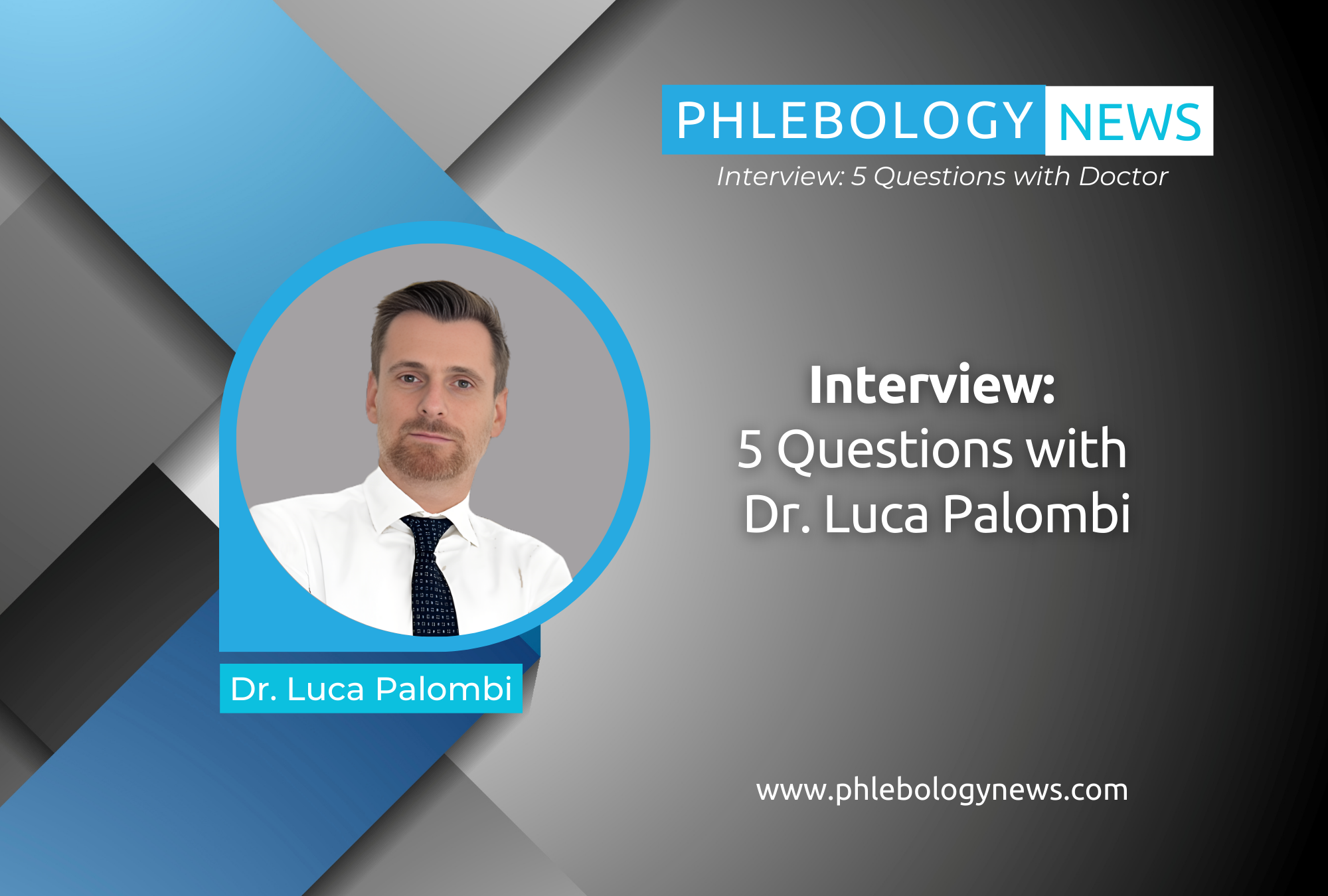
Dr. Luca Palombi is an Italian MD, Specialist in Vascular and Endovascular Surgery, with a strong focus on minimally invasive venous treatments, aesthetic phlebology, vascular imaging, and wound care. Co-founder of the Cura Vene Roma medical practice in Rome and practices at the Angiology and Vascular Surgery Unit of the Villa Salus Foundation Hospital in Mestre (Venice), where he has been involved in over 3,000 minimally invasive procedures for venous disease. Dr. Palombi is Co-Chair of the Vein in Venice International Symposium, Scientific Director of Medi.care Magazine, and author of numerous peer-reviewed publications and book chapters in the field of phlebology and vascular surgery. He is a frequent speaker at national and international conferences and actively involved in educational programs and advanced training courses in venous surgery.
Interview questions:
Can you describe a particularly difficult case you have encountered in your practice as a phlebologist and how you dealt with it?
One of the most challenging cases I have managed involved an extensive recurrence of varicose veins associated with an aneurysmatic dilatation of the neo–saphenofemoral junction in CEAP C6 patient. This patient had undergone previous surgical treatment of the great saphenous vein, with complex postoperative anatomy characterized by neovascularization, multiple incompetent tributaries, and a markedly dilated neo-crosse with turbulent reflux (4 cm). The main challenge was accurate anatomical and hemodynamic assessment. A detailed duplex ultrasound examination, including dynamic maneuvers, was essential to identify the true sources of reflux, differentiate neovascular channels from residual venous stumps, and evaluate the aneurysmatic segment in terms of size, flow pattern, and thrombotic risk. Given the complexity and the high risk of further recurrence or complications with conventional redo surgery, a tailored minimally invasive approach was chosen. The treatment strategy combined targeted endovenous techniques to exclude the aneurysmatic neo-junction, along with selective ablation of incompetent venous pathways and adjunctive ultrasound-guided foam sclerotherapy for residual varicosities. The entire procedure was planned to minimize surgical trauma while achieving effective hemodynamic correction. Post-procedural follow-up with serial ultrasound confirmed exclusion of the aneurysmatic segment, resolution of pathological reflux, and significant clinical improvement (ulcer healing). This case reinforced the importance of advanced ultrasound skills, individualized treatment planning, and the integration of different endovenous techniques when managing complex recurrent varicose vein disease.
What new developments or advances in venous surgery are you most excited about, and how do you think they will improve outcomes for patients?
I am particularly excited about the ongoing evolution toward increasingly precise, minimally invasive, and ultrasound-driven venous interventions. Among the most impactful developments are next-generation endovenous laser technologies, especially wavelengths above 1900 nm combined with advanced long-radial fibers. These systems allow more selective energy absorption by water, resulting in more homogeneous vein wall damage, reduced perivenous thermal spread, less post-procedural pain, and faster recovery, while maintaining excellent occlusion rates. Equally important is the refinement of duplex ultrasound, including dynamic and portable systems, which is transforming both preoperative planning and intraoperative guidance. Improved imaging allows a more accurate hemodynamic assessment, better identification of reflux patterns, and real-time verification of treatment efficacy, significantly reducing recurrence rates. Finally, I believe that the future of venous surgery lies in the integration of technology, evidence-based protocols, and education. Standardization of techniques such as total endovenous laser ablation, combined with continuous training and outcome monitoring, will further improve safety, reproducibility, and long-term patient outcomes, while keeping procedures increasingly patient-centered.
What advice would you give to patients who are considering vein surgery, and how can they prepare for the procedure and recovery?
My main advice to patients considering venous surgery is to view it as a personalized medical journey rather than a standardized procedure. Not all varicose veins are the same, and the success of treatment depends on a correct diagnosis and a tailored therapeutic plan.
In your opinion, what distinguishes phlebology from other surgical specialties, and what attracted you to this field?
What truly sets phlebology apart is that the surgeon is directly involved in every step of the process: diagnosis, procedural planning, execution, and follow-up. Duplex ultrasound is not merely a diagnostic tool but an extension of the surgeon’s hands, guiding decision-making in real time. This makes phlebology a highly dynamic and intellectually engaging field. I was drawn to phlebology because it combines advanced technology with a strong impact on patients’ quality of life. Even minimally invasive procedures can lead to significant functional and symptomatic improvement, often with immediate results and rapid recovery.
How do you see the future evolution of phlebology and what role do you think technology and innovation will play in this evolution?
I see the future of phlebology evolving toward increasingly personalized, image-driven, and minimally invasive care. The traditional concept of treating a single vein is being replaced by a comprehensive hemodynamic approach, in which treatment is tailored to the patient’s unique venous anatomy, reflux patterns, and clinical needs. Innovation in endovenous therapies will further expand treatment options. Next-generation thermal technologies, refined non-thermal non-tumescent techniques, and combination strategies will allow safer, more reproducible results with less discomfort and faster recovery. At the same time, standardization of protocols and concepts such as total endovenous treatment will help reduce variability and recurrence.