

Short Biography Information
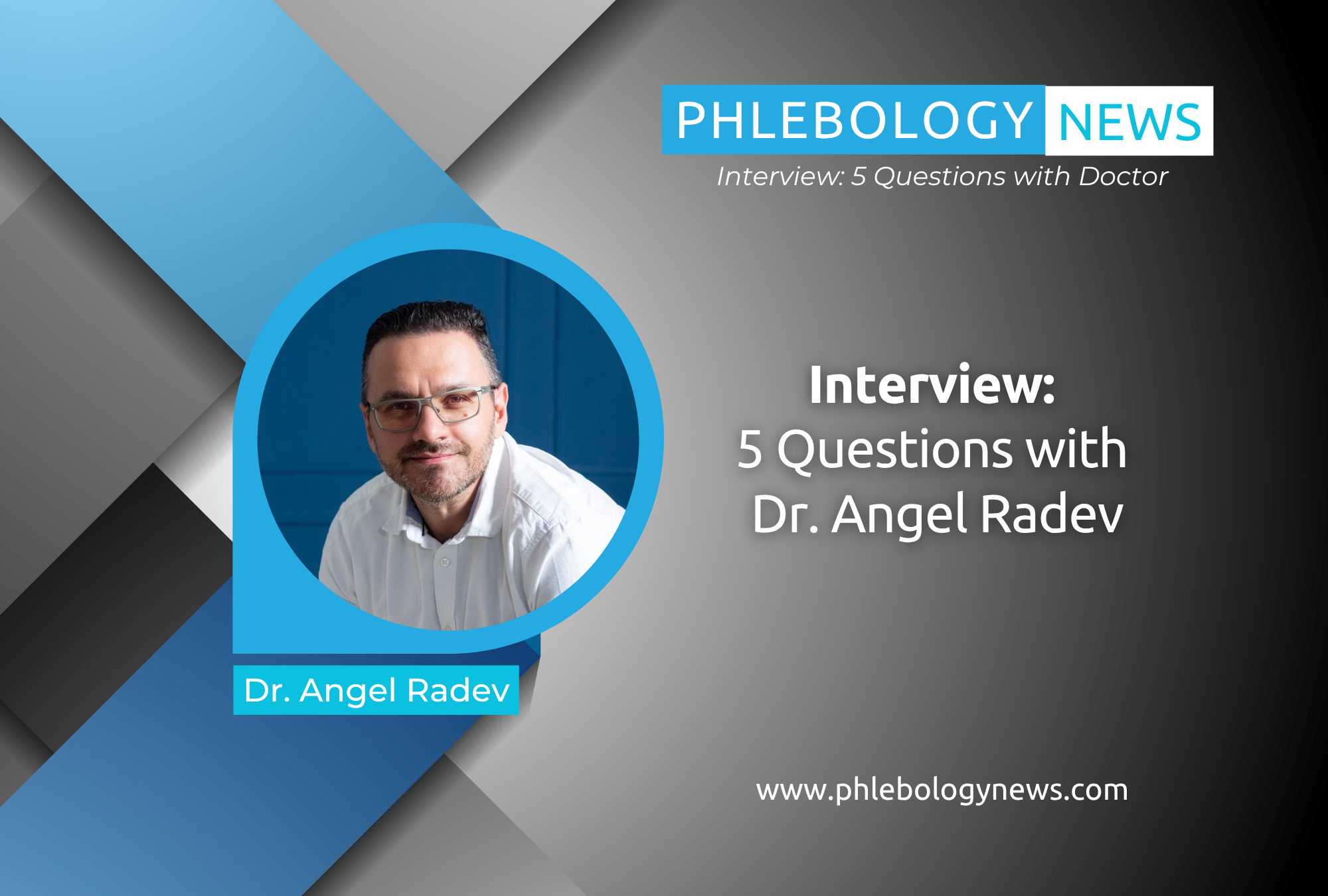
Dr. Angel Radev is a phlebologist and angiologist and the founder of Varix Clinic, a specialized venous laser center based in Sofia, Bulgaria. His clinical focus is centered on minimally invasive, image-guided treatments of venous disease, including endovenous laser ablation (EVLA), ultrasound-guided foam sclerotherapy, ambulatory phlebectomy, CLaCS (Cryo Laser and Cryo Sclerotherapy), and advanced combined techniques for complex and recurrent cases. Dr. Radev is also actively introducing innovative approaches into clinical practice, including TASAR Cryo (Tumescent Assisted Sclerotherapy with Augmented Reality and Cooling), aiming to further enhance precision, patient comfort, and treatment outcomes in both medical and aesthetic phlebology. He is the creator of the Varix 360° Vein System — a comprehensive, structured approach to the diagnosis, treatment, and long-term management of venous disease, based on hemodynamic principles, personalized treatment strategies, and long-term outcome optimization. With a strong interest in advancing modern phlebology beyond procedure-based thinking, Dr. Radev focuses on addressing the underlying hemodynamic mechanisms of venous pathology rather than isolated anatomical findings. His work emphasizes precision ultrasound diagnostics, individualized treatment planning, and the integration of multiple minimally invasive techniques to achieve durable clinical results. In addition to his clinical practice, Dr. Radev is actively involved in developing new models for patient-centered care and structured treatment protocols. His long-term vision is to position Varix Clinic as a leading European center for advanced venous medicine.
Interview questions:
Can you describe a particularly difficult case you have encountered in your practice as a phlebologist and how you dealt with it?
One of the most challenging cases I encountered involved a patient with multiple recurrences after previous treatments, including surgery and endovenous procedures, presenting with persistent symptoms and advanced venous disease, including venous ulcers. The real challenge in such cases is not performing another procedure, but understanding why the previous treatments failed. A detailed duplex ultrasound examination revealed a complex hemodynamic pattern, including residual reflux sources, incompetent perforators, and altered venous drainage pathways. Instead of applying a standard technique, I developed a structured, step-by-step treatment strategy combining targeted endovenous ablation, ambulatory microphlebectomy, ultrasound-guided foam sclerotherapy, and selective treatment of pathological tributaries, based on the individual reflux pattern and anatomical distribution, while preserving functional venous drainage where physiologically relevant. “Recurrence is not bad luck — it is usually a sign of an incomplete strategy.” This case reinforced a key principle in my practice: when the underlying hemodynamics are properly understood and addressed, even complex cases can achieve stable long-term results.
What new developments or advances in venous surgery are you most excited about, and how do you think they will improve outcomes for patients?
We are currently witnessing a significant shift in phlebology — from procedure-based medicine to strategy-based and patient-centered care. Technological advancements such as high-wavelength lasers, non-thermal techniques, and image-guided interventions are important, but they are not the true breakthrough on their own. Their value lies in how they are integrated into a personalized treatment strategy. “Technology is only as good as the strategy behind it.”
I am particularly interested in the evolution toward less invasive and more precise techniques, including non-thermal and non-tumescent approaches, as well as emerging technologies such as HIFU. Innovations such as augmented reality and advanced imaging have the potential to further enhance precision and reproducibility. Ultimately, the future belongs to clinicians who can select the right method for the right patient — not those who rely on a single technique.
What advice would you give to patients who are considering vein surgery, and how can they prepare for the procedure and recovery?
The most important step for any patient is to understand the reason for treatment. Venous disease is highly individual, and there is no universal solution. Patients should be cautious of simplified messages or treatments presented as universally applicable. “The most important part of the treatment is not the procedure — it is the diagnosis.” A correct and detailed duplex ultrasound examination is essential. Patients should seek a specialist who explains the underlying problem and proposes a personalized treatment plan. It is also important to have realistic expectations. Effective venous treatments are minimally invasive, but they still involve a controlled inflammatory response and a short recovery period. “We do not promise totally pain-free treatments — we promise predictable and controlled recovery.” Finally, long-term results matter more than short-term impressions. The goal is to reduce recurrence and ensure sustainable improvement.
In your opinion, what distinguishes phlebology from other surgical specialties, and what attracted you to this field?
Phlebology is unique because it integrates diagnosis, decision-making and treatment into a single continuous process. The specialist is involved in every stage — from ultrasound mapping to treatment execution and long-term follow-up. “In phlebology, the same person must think, diagnose, and treat — otherwise the system breaks.” Modern phlebology is no longer about treating isolated veins, but about understanding the venous system as a whole — its hemodynamics, function, and long-term behavior. This makes it a highly dynamic and intellectually demanding field with a direct and meaningful
How do you see the future evolution of phlebology and what role do you think technology and innovation will play in this evolution?
The future of phlebology will be defined by several key directions. First, a continued shift toward minimally invasive, outpatient treatments. Second, a deeper focus on hemodynamic understanding and personalized strategies. Third, integration of data, artificial intelligence, and long-term outcome tracking — particularly in improving prediction of recurrence and treatment planning. “The future of phlebology is not only about removing veins — it is about improving venous function and quality of life.” Phlebology will also expand into a broader discipline requiring multidisciplinary collaboration. Ultimately, the goal is not simply to treat veins, but to deliver durable, long-term results for the patient.